Cats: Indoor, outdoor or hybrid?
Published in Cats & Dogs News
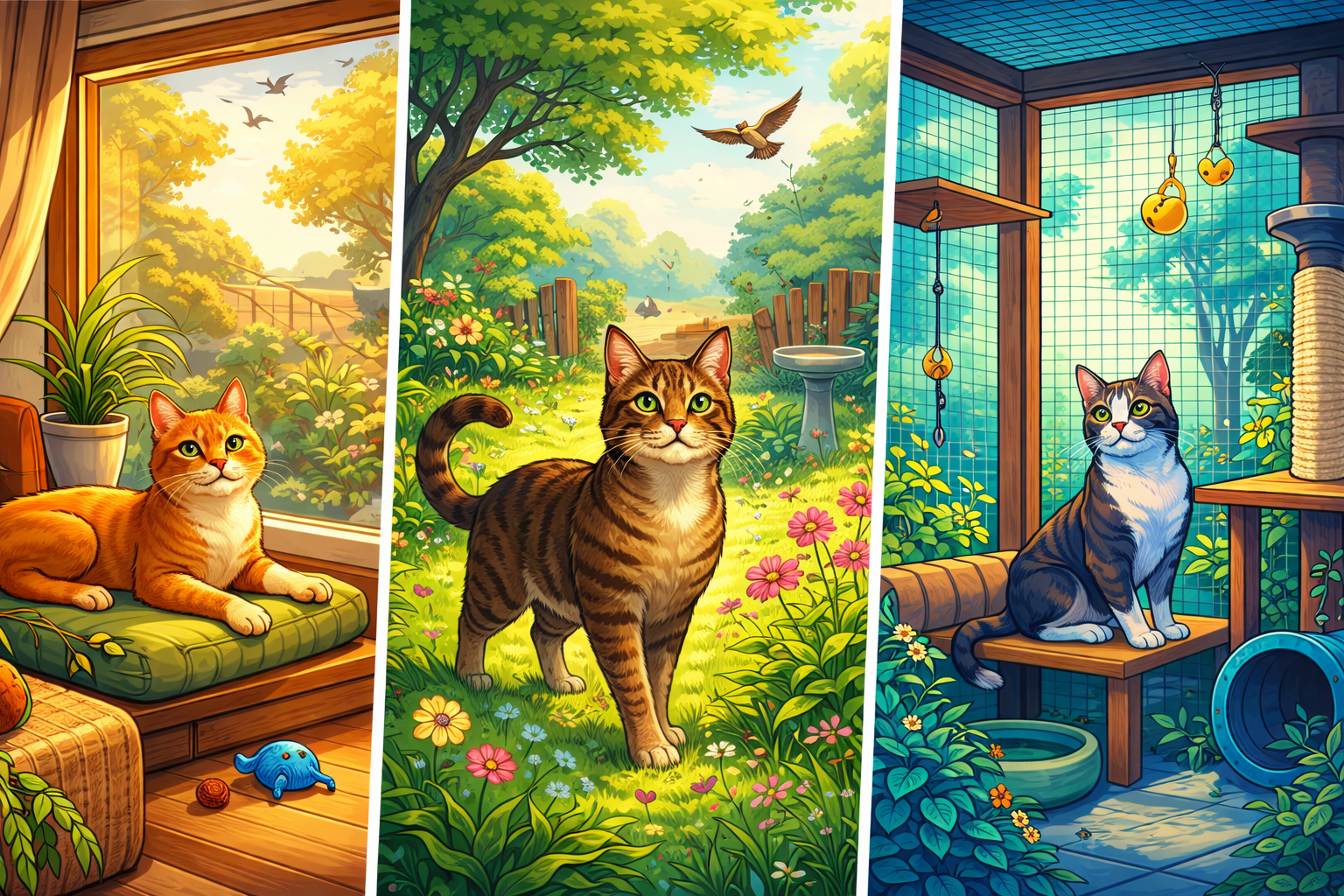
Cats have long lived on the boundary between the domestic and the wild, creatures equally at home curled on a sofa or stalking silently through tall grass. For modern pet owners, that duality raises a persistent question: should cats live strictly indoors, roam freely outdoors, or split their time between both worlds? The answer, veterinarians and animal behavior experts say, depends on a balance of safety, enrichment and responsibility — and increasingly, the evidence tilts toward keeping cats inside, or at least carefully managing their outdoor access.
Across the United States, an estimated 60 to 80 million cats are owned as pets, according to industry groups, with millions more living as strays or feral animals. How those cats live — and how long they live — varies dramatically depending on whether they venture outside unsupervised.
The case for indoor cats
Veterinarians consistently point to lifespan as one of the clearest arguments for keeping cats indoors. Indoor cats commonly live into their mid-teens or beyond, while outdoor cats often face significantly shorter lives due to accidents, disease and predation.
“An indoor environment removes most of the unpredictable risks,” said Dr. Alicia Harmon, a small-animal veterinarian based in the Mid-Atlantic region. “Cars, toxins, fights with other animals — those are things indoor cats simply don’t encounter.”
Traffic is among the most common dangers. Even in suburban neighborhoods, a cat’s instinct to dart or chase can put it directly in harm’s way. Exposure to diseases such as feline leukemia virus (FeLV) or feline immunodeficiency virus (FIV) also increases when cats interact with unknown animals.
Beyond physical safety, indoor living can reduce stress. Contrary to popular belief, many cats do not require outdoor access to feel fulfilled. Experts note that cats are territorial rather than exploratory by nature, and a well-enriched indoor environment — with climbing spaces, toys and human interaction — can meet their needs.
Still, indoor life is not without challenges. Obesity, boredom and behavioral issues can arise if cats lack stimulation. Scratching furniture, nighttime activity and overgrooming are often cited as signs that an indoor cat’s environment needs improvement.
The appeal — and risks — of outdoor living
For generations, allowing cats to roam freely outdoors was considered normal, even beneficial. Many owners still see outdoor access as essential to a cat’s happiness, pointing to natural behaviors such as hunting, climbing and exploring.
“There’s no question that the outdoors provides rich sensory experiences,” said animal behaviorist Karen Liu. “The sights, smells and textures are incredibly stimulating.”
Cats allowed outside often display increased physical activity and may be less prone to weight gain. They can engage in instinctive behaviors that are difficult to replicate indoors, such as stalking prey or navigating varied terrain.
However, those benefits come with substantial risks. In addition to traffic and disease, outdoor cats face threats from predators, including coyotes and large birds of prey in some regions. Human-related dangers — such as poisoning, intentional harm or becoming trapped in garages and sheds — also contribute to mortality.
Wildlife impact is another growing concern. Studies have shown that free-roaming domestic cats are responsible for billions of bird and small mammal deaths annually in North America. Conservation groups increasingly advocate for keeping pet cats indoors to protect local ecosystems.
“Cats are incredibly efficient hunters,” Liu said. “Even well-fed pets will hunt, and the cumulative effect on wildlife is significant.”
Hybrid approaches gain traction
As awareness of both safety concerns and cats’ behavioral needs has grown, many owners are turning to hybrid solutions that aim to offer the best of both worlds.
One popular option is the “catio,” an enclosed outdoor space that allows cats to experience fresh air and natural stimuli without the risks of free roaming. These structures range from simple window boxes to elaborate backyard enclosures connected to the home.
Leash training is another alternative, though it requires patience and a cooperative cat. Using a harness designed specifically for felines, some owners take their cats on supervised outdoor walks, providing controlled exposure to the environment.
In addition, some households allow limited outdoor access during specific times, such as daylight hours, or within fenced yards designed to prevent escape. Advances in pet tracking technology have also made it easier to monitor cats that do go outside, though experts caution that tracking does not eliminate inherent dangers.
“Supervised or contained outdoor time can be a great compromise,” Harmon said. “It gives cats enrichment while significantly reducing risk.”
Hybrid approaches also extend indoors. Window perches, interactive toys, puzzle feeders and multi-level climbing structures can mimic aspects of the outdoor environment. Rotating toys and introducing new stimuli periodically can help prevent boredom.
Behaviorists emphasize that individual temperament matters. Some cats adapt easily to indoor-only life, while others show persistent interest in the outdoors. Early socialization plays a role, as kittens raised indoors are more likely to remain content inside as adults.
Finding the right balance
Ultimately, the decision of whether a cat should be indoor, outdoor or hybrid is shaped by a combination of factors: the cat’s personality, the owner’s lifestyle, and the surrounding environment.
Urban areas with heavy traffic and limited green space tend to favor indoor or enclosed approaches. Rural settings, while offering more space, may introduce different risks such as predators or exposure to agricultural chemicals.
Animal welfare organizations increasingly recommend keeping cats indoors or providing only controlled outdoor access. The American Veterinary Medical Association and the Humane Society of the United States both highlight safety and wildlife protection as key reasons for limiting free roaming.
At the same time, experts caution against a one-size-fits-all approach. A formerly outdoor cat may struggle to transition fully indoors without gradual adjustment and enrichment. Conversely, an indoor cat suddenly given unrestricted outdoor access may be ill-equipped to navigate hazards.
“Responsible ownership is about understanding your individual cat,” Liu said. “It’s not just about where they live, but how you support their physical and mental well-being.”
For many households, the trend is moving toward intentional living arrangements — designing environments that keep cats safe while honoring their instincts. Whether that means a sunlit window perch, a screened-in patio or a carefully supervised backyard excursion, the goal remains the same: a life that is both secure and satisfying.
As the debate continues, one point draws near-universal agreement among experts: a thoughtful, engaged owner plays the most important role of all. A cat’s quality of life, they say, is shaped less by the boundaries of its environment than by the care and attention it receives within them.
========
Marin Ellsworth is a freelance journalist covering animal behavior and human–pet relationships. She focuses on translating veterinary and scientific insights into practical guidance for everyday life. This article was written, in part, utilizing AI tools.








Comments