NC will send a record 5 Black lawmakers to Congress, 150 years after its first
Published in Political News
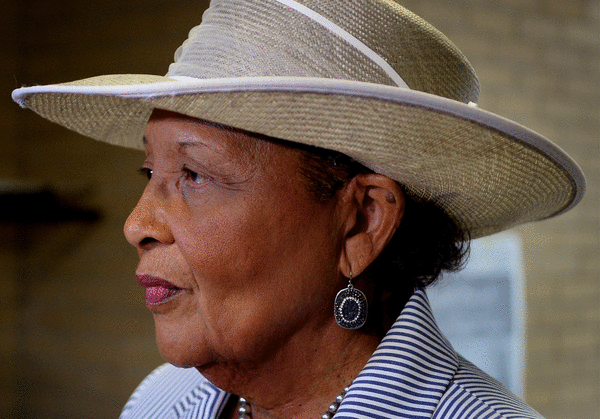
RALEIGH, N.C. — Beyond the major upsets to the Republican Party in North Carolina, Tuesday’s results brought a milestone in racial representation in the state’s congressional delegation.
North Carolina’s delegation is poised to flip from 10 Republicans and four Democrats to 10 Democrats and four Republicans, pending the outcome of some races close enough for a recount.
It’s also set to include a record five Black members.
U.S. Reps. Alma Adams, Valerie Foushee and Don Davis, all Democrats, are North Carolina’s current members of the Congressional Black Caucus. All three won reelection Tuesday.
They’ll be joined in Congress by Democrat LaKesha Womack, who defeated first-term Republican Rep. Tim Moore, the longest-serving speaker in N.C. House history, in the 14th Congressional District.
Womack owns a business development consulting firm and serves as a mentor in Goldman Sachs’ One Million Black Women: Black in Business program and as chief strategy officer for ASPIRE Community Capital, which lends to entrepreneurs, according to her responses to a candidate questionnaire from The Charlotte Observer and The News & Observer.
Also joining them is Democrat Cyril Jefferson, the mayor of High Point and a former councilman, who unseated first-term Republican Rep. Addison McDowell in the 6th District.
Jefferson will be the first Black person to represent the 6th District. When he launched his campaign, he told the High Point Enterprise that he and his supporters didn’t take lightly the chance to make history.
Two other Black Democratic candidates came within a percentage point of winning. In the 3rd District, Republican Rep. Greg Murphy leads Raymond Smith, and in the 7th District, Republican Rep. David Rouzer leads Kimberly Hardy. Both margins are under the 1% threshold that allows the trailing candidate to request a recount under state law.
Election results could also produce another milestone in the state legislature. With Democrats winning control of the N.C. House for the first time since 2010, House Minority Leader Robert Reives was introduced as the next speaker of the House at the Democratic Party’s election-night watch party.
If elected by the chamber in January, Reives would become the second Black speaker in state history. Dan Blue served as the first, from 1991 to 1994.
Record numbers
The milestone comes more than 150 years after Joseph Rainey of South Carolina, who was born enslaved, became the first Black member of the U.S. House, sworn in at the end of 1870, according to the Office of the House Historian. North Carolina’s first Black congressman, John Adams Hyman, served from 1875 to 1877.
Black political gains during Reconstruction were soon met with a backlash from white Southerners, including voter disenfranchisement and violence, and the number of Black members of Congress declined in the decades that followed, according to the House Historian. After George Henry White of North Carolina won his second and final term in 1898, it would be 30 years before another Black American was elected to Congress, when Oscar De Priest won a seat from Chicago in 1928.
In the South, the wait was far longer. It wasn’t until 1972, with the elections of Barbara Jordan of Texas and Andrew Young of Georgia, that Southern voters again sent Black members to Congress. More than 80% of all Black members who have served in Congress were elected after 1966, according to the House Historian’s count through June 2022.
North Carolina waited even longer. After White left office in 1901, the state had no Black member of Congress for more than 90 years, until Eva Clayton won the 1st District seat in 1992. She served until 2003. Mel Watt joined her in 1993, representing the 12th District until 2014.
North Carolina has had at least one Black member of Congress ever since, but never more than three serving at once, based on House Historian data. It has never had a Black U.S. senator.
‘A perfect capstone’
“This is the 250th celebration still of the founding of America, and we all realize that at that time, Black residents ... were not allowed to vote, and so to think about how far the nation has come in these 250 years, this is a perfect capstone to understand the importance and the significance of Black representation at the highest level,” said Marcus Bass, executive director of the North Carolina Black Alliance, a nonprofit network of Black elected officials.
The winners won’t “govern in all-Black districts,” Bass said. “They’re going to be governing white constituents. They’re going to be governing Latiné constituents, Democrats and Republicans alike.”
Black North Carolinians make up about 21% of the state’s population.
“These individuals, regardless of their race, even though historic, are really going to meet the need of all individuals and community,” Bass said. “And we’re going to make sure that they are accountable to that, not just to Republican or Democrat or Black or white, but also to younger voters, to women.”
Bass said the Black Alliance knocked on about a quarter of a million doors across the state this year and plans to spend early 2027 helping voters hold their new representatives accountable.
“We know the Republicans lost, but who really won? And did the people win?” Bass said. “We won’t know until they take their oath of office in January.”
_____
©2026 Raleigh News & Observer. Visit newsobserver.com. Distributed by Tribune Content Agency, LLC.








































Comments