Americans agree their democracy is in crisis – yet the solution is as simple as it is elusive
Published in Political News

Despite being divided on most issues, an overwhelming majority of Americans agree that their democracy is in a state of crisis or facing serious challenges.
A few of the symptoms of the problem: Close allies see the U.S. as a threat to peace. Immigration raids by poorly trained federal agents have terrorized cities. President Donald Trump claims that only his own sense of morality limits his power. The Trump administration has politicized the Justice Department, and many of Trump’s political nominees refuse to acknowledge that Joe Biden won the 2020 presidential election.
Plato warned that an unhealthy democracy can easily fall prey to a tyrant. As a scholar of American government, I see dishonest leaders, an environment of declining trust and a cultural penchant for violence as symptoms of Plato’s scenario.
The courts, which research suggests are ineffective at instituting significant political change, cannot adequately counter today’s democratic crisis. So what can?
One thing I’ve learned over two decades is that when it comes to the fundamentals of democracy, political science is not rocket science. A healthy democracy requires educated citizens, including a free press and an engaged public.
American government is supposed to be run by the people with what Founding Father James Madison called their “cool and deliberate” sense in charge. This ideal vision of democracy requires that citizens consider various sides of an argument before coming to a decision.
But the modern era is one of misinformation and so-called alternative facts. Only 1 in 5 Americans think Republicans and Democrats can agree on basic facts.
The American experiment tested whether a government could be founded on reason. But that requires a common understanding of an objective reality.
Trust in government has fallen. Only 17% of Americans now trust Washington to do what is right most of the time, among the lowest readings since polling began in 1958, when 73% said they did.
That matters because, according to the Pew Research Center, “trust is associated with better-functioning democratic institutions” – and it’s not just trust in the government that’s declining.
Americans’ trust in the media to report “fully, accurately and fairly” is at an all-time low, with only 28% expressing a great deal or fair amount of trust in newspapers, television and radio. In fact, adults under 30 years old now trust social media as much as they trust national news organizations.
Americans have not only lost trust in fundamental institutions of democracy but also each other: Only 34% of adults believe “most people can be trusted,” according to the Pew Research Center.
Meanwhile, 83% of Americans say the country has turned away from its founding ideals, and 37% believe violence may be necessary “to get the nation back on track,” according to a recent NPR/PBS News/Marist poll.
In times of turmoil, it is tempting to seek change in what Abraham Lincoln called the “mobocratic spirit,” through which mobs would “throw printing presses into rivers, shoot editors, and hang and burn obnoxious persons at pleasure.” His remedy, however – as someone who had received minimal formal schooling – was a better educated citizenry that followed facts and reason instead of their base passions.
Thomas Jefferson founded the University of Virginia in part because he believed only educated citizens could make self-government succeed.
Political behavior scholarship typically measures education by a person’s level of formal schooling. By that measure, education is the most consistent predictor of political knowledge, and people with more of it are more likely to vote. In 2024, turnout for those with an undergraduate degree was 77%, compared with 53% for high school graduates.
Conversely, lower education levels are linked to belief in conspiracy theories and less esteem for journalists.
The media is itself a source of education. Journalists report on governmental affairs and act as watchdogs, exposing abuse and corruption.
Today, though, the press is under siege.
Trump has called the press an enemy of the people. Since 2017, there have been more than 1,400 incidents of physical violence against journalists, most of them committed by law enforcement. The Justice Department has subpoenaed journalists and pushed them to testify about their newsgathering, a move First Amendment advocates say chills reporting.
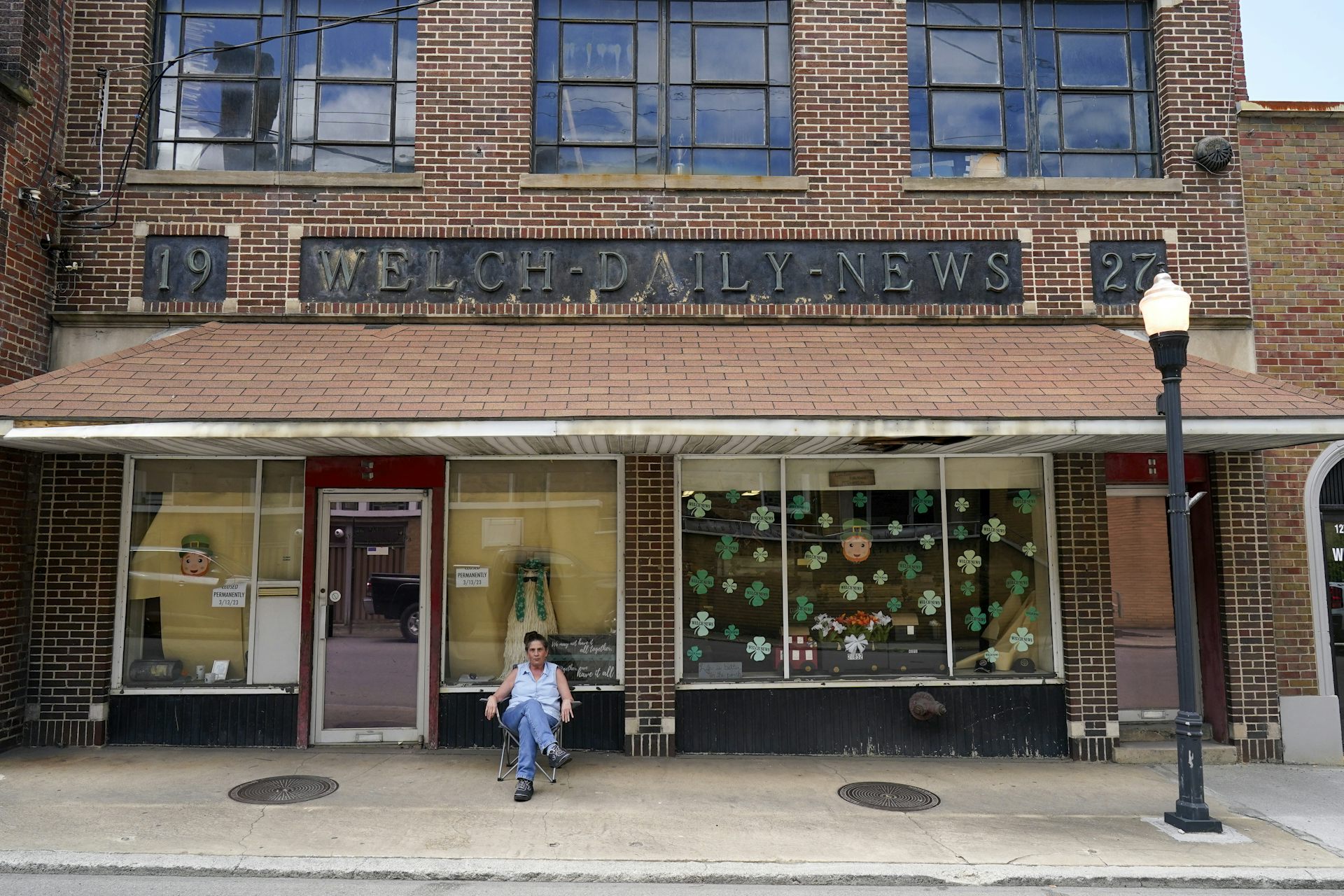
Americans trust local news outlets more than national organizations, but local newspapers are dying at alarming rates.
As more people get their news from social media instead of professional reporters, and as local news outlets close or consolidate with larger organizations, I believe political polarization will increase.
Ultimately, Americans get the government they deserve, as politicians tend to represent what voters want.
The 47th speaker of the House, Tip O’Neill, once said, “All politics is local,” by which he meant things get done wherever the people are. That too is where I believe the corrective starts: a voter informed enough to think critically and to argue with opponents on the merits of public policy rather than attack them.
In 1820, replying to an argument that courts were the ultimate check on abuses of constitutional power, Jefferson wrote there is “no safe depository of the ultimate powers of the society but the people themselves.” Education, he explained, is the “true corrective.”
To be sure, if education is the solution, then a conversation about what it means to be educated has to come first – and that is not a simple problem to solve.
Whether – and where – someone went to college has become a partisan marker. There is currently a diploma divide in the U.S.: White voters without a college degree mostly support Republicans, while those with one mostly support Democrats. Over the past 50 years, the percentage of Republican representatives and senators who attended elite institutions fell from 40% to 15%, and from 55% to 35%, respectively.
But facts are the same at an Ivy League school, a public university or the local pub. Whatever being educated means – and it does not necessarily mean simply going to college – it must include the ability to distinguish between one’s personal ideological passions and objective facts.
“Passion has helped us; but can do so no more,” Lincoln warned before the Civil War. “It will in future be our enemy.”
This article is republished from The Conversation, a nonprofit, independent news organization bringing you facts and trustworthy analysis to help you make sense of our complex world. It was written by: Kenneth Michael White, Kennesaw State University
Read more:
Americans remain hopeful about democracy despite fears of its demise – and are acting on that hope
The United States’ human rights practices are taking a nosedive
Social media can support or undermine democracy – it comes down to how it’s designed
Kenneth Michael White does not work for, consult, own shares in or receive funding from any company or organization that would benefit from this article, and has disclosed no relevant affiliations beyond their academic appointment.














Comments