Grasses in the Chesapeake Bay expanded nearly 13% in 2025
Published in Science & Technology News
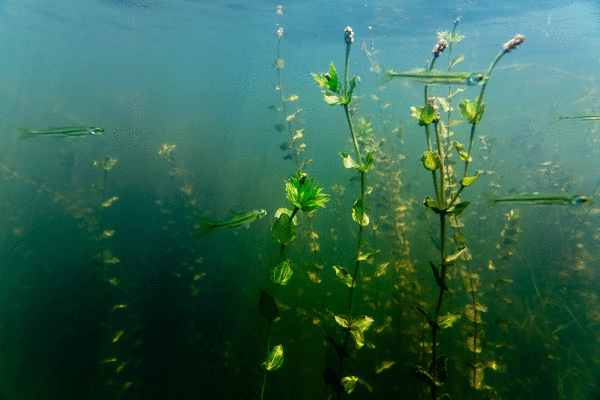
Underwater grasses in the Chesapeake Bay and its tidal tributaries increased 13% in 2025, covering almost 5,000 more acres in Maryland’s portion of the Bay, the Maryland Department of the Environment reported.
“More underwater grass means more habitat for blue crabs and fish, cleaner water, and a more resilient Chesapeake Bay,” Maryland Department of Natural Resources Secretary Joshua Kurtz said in a statement. “This year’s increase is welcome progress, but it also reinforces the work ahead. We need to keep reducing pollution, protecting existing underwater grass beds, and restoring the shallow-water habitats that allow these plants and the Bay life that depends on them to thrive.”
The 2025 coverage, totalling 36,799 acres in the Maryland portion of the Bay, represents 36% of Maryland’s goal to restore 114,000 acres of vegetation.
Across the whole bay, grasses increased 7%, populating 6,000 more acres to cover almost 90,000 acres. The Virginia Institute of Marine Sciences published its annual survey of submerged aquatic vegetation, mapping the entire bay and tidal tributaries. The coverage was the sixth highest recorded since aerial measurements began in 1984.
The grasses are a key indicator of Bay health because they require clear water to get the sunlight they need to thrive. Maryland’s pollution control programs are aimed at reducing the murky water created by erosion and algae blooms. They further improve water quality by absorbing nutrients, trapping suspended silt, adding oxygen to the water and helping reduce shoreline erosion, state officials said.
Bay grasses also store carbon and reduce acidification, which in turn benefits crab and oyster fisheries.
“What is especially encouraging about 2025 is that the gains were not confined to one place,” Brooke Landry, Submerged Aquatic Vegetation program chief for Maryland DNR and chair of the Chesapeake Bay Program’s SAV Workgroup, said in a statement. “We saw expansion in both freshwater and moderately salty parts of Maryland’s Bay waters.”
________
©2026 The Baltimore Sun. Visit at baltimoresun.com. Distributed by Tribune Content Agency, LLC.






Comments