Commentary: Listen to what single moms are saying
Published in Mom's Advice

I didn’t need a national report to tell me what single mothers need to survive because I’ve been there; I’ve lived it.
In partnership with the Urban Institute, my group, the Jeremiah Program— a national nonprofit working to make economic mobility possible for single mothers and their children — published “Elevating Their Voices: What Single Mothers Say They Need to Survive.” Substantiating what we have been saying for years, the report identifies childcare as “a significant challenge for these single mothers, and mothers of young children and student parents disproportionately feel this burden.”
This is especially true for Nevada. A fact sheet from The Children’s Cabinet shares that, for married couples in the Silver State, licensed care for children in infancy through age four ranges from 9% to 12% of median household income, compared to 25% to 35% of that of single mothers.
To put these numbers in perspective, the U.S. Department of Health and Human Services deems childcare affordable only if it is less than 7% of a family’s income. So childcare as a sector is unaffordable for most of us, but especially for single mothers.
To address childcare affordability, the state provides some assistance. Childcare subsidies are available for households at or below 41% of Nevada’s median income. But the Guinn Center notes in a recent report that only around 10% of eligible families in Nevada participate. Moreover, after the American Rescue Plan Act expired, “the Childcare Subsidy Program has returned to pre-pandemic funding levels, resulting in a waitlist for new applicants and co-payment requirements for many participants.”
Nevada’s childcare subsidy programs have been moved from one administrator to another, resulting in continued delays in stipend delivery. The Jeremiah Program exists to fill these gaps. When a mother doesn’t receive her childcare subsidy from the state, the program will help with initiatives like summer enrichment funding. More than financial assistance, the Jeremiah Program also provides career support, tutoring for children and backup childcare.
Community isn’t just an extra benefit of the program; it is the program. I distinctly recall moments when I was raising my son, Taj, by myself and relying on a sisterhood of other single moms for childcare. The kids would rotate through our houses, giving the other moms time to refresh and reset. For single mothers, the Jeremiah Program understands the importance of forming a sisterhood, one of the benefits our moms refer to most as they journey through the initiative and go on to obtain college degrees.
Single women and their children are often treated as though their struggles are unique to their demographic. In an April 2025 report, the Urban Institute notes: “In a recent study of 30 democratic countries with highly developed economies, the U.S. was found to have the highest ‘penalty’ for single motherhood.”
The struggles of single motherhood are a bellwether for substantial inequalities, early indicators of where — and how — systems are breaking down. While the experience of being a single mother is not monolithic, we are the proverbial canary in a coal mine. From a glass-half-full perspective, single mothers are an indicator of the opportunities for lawmakers and changemakers to make shifts that can impact the lives of a broad swath of Americans.
The report is clear — single mothers are not asking for sympathy. They want systems that work, especially when it comes to healthcare, childcare, housing, food, higher education and flexible employment. Developing smart, comprehensive solutions improves systems for everyone, not just single parents. Essentially, a high tide lifts all boats.
If we can respond to the challenges and barriers that single moms face on a daily basis, we can build systems that work better for everyone. This is why this report is not simply about elevating the voices of single mothers. It’s about listening to them, and finally responding with the investments they’ve been asking for this whole time.
_____
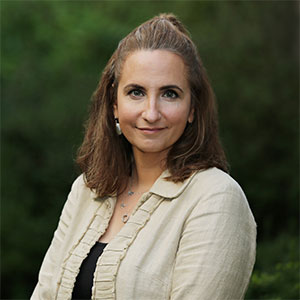
Maria Tucker is executive director of the Jeremiah Program in Las Vegas, Nevada. This column was produced for Progressive Perspectives, a project of The Progressive magazine, and distributed by Tribune News Service.
_____
©2026 Tribune Content Agency, LLC.








Comments