DA won't charge LA anti-gang worker Skipp Townsend -- but his son now faces a murder case
Published in News & Features
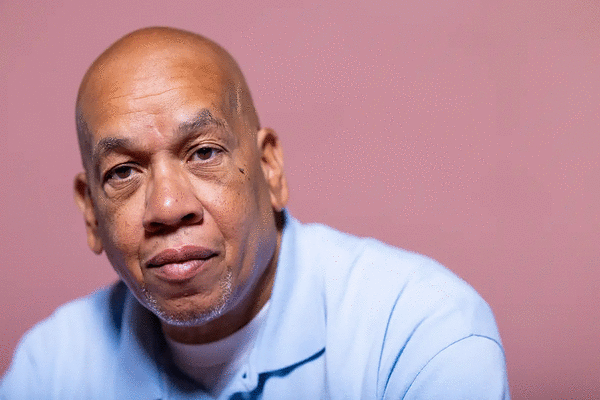
LOS ANGELES — Prosecutors have decided not to file charges against a prominent South L.A. anti-gang worker, just days after he was arrested on suspicion of conspiracy to commit murder by Los Angeles Police and the FBI, a defense attorney and three law enforcement sources told the Los Angeles Times on Friday.
But while 62-year-old Clifford “Skipp” Townsend was spared from prosecution, his son faces a murder charge instead, authorities said.
Townsend, executive director of the violence prevention group 2nd Call, was taken into custody by LAPD detectives and federal agents Wednesday. Prosecutors decided not to bring a criminal complaint against him by Friday afternoon, according to his attorney and the three law enforcement sources, who requested anonymity because they were not authorized to discuss the case.
On Friday afternoon, the L.A. District Attorney’s Office alleged Kody Townsend, 19, used an assault rifle to gun down Reginald Foreman, an employee of 2nd Call, in August. The men were members of rival factions of the Crips street gang, according to the district attorney’s office, which described the killing as “gang motivated.”
The younger Townsend had not been arrested as of Friday afternoon but faces one count of murder, the district attorney’s office said in a news release.
Jeremiah Abdelhameed, 25, was charged as an accessory after the fact in Foreman’s death. Abelhameed was one of several people arrested along with Skipp Townsend on Wednesday.
Detectives from the LAPD’s Robbery Homicide Division and federal agents descended on 2nd Call’s offices at La Brea Avenue and Obama Boulevard on Wednesday, where they seized several computers. Cellphone video circulating on social media captured the elder Townsend being led into a black-and-white LAPD squad car by officers.
“Obviously, we are pleased that charges were not filed in this case, but we remain confounded by the LAPD’s decision to arrest him. Skipp Townsend has been a leader in violence prevention for more than 20 years and is known for his work in Los Angeles and across the nation,” his attorney, Tiffiny Blacknell, said in a text message. “While he is eager to return to his violence-prevention work, the motivation behind his arrest remains unclear and continues to confound us.”
Skipp Townsend was expected to be released from custody later Friday. Blacknell did not know who was representing her client’s son.
A spokesperson for the district attorney’s office declined to answer a question about the decision not to charge Skipp Townsend. The LAPD didn’t immediately respond to a request for comment.
The district attorney’s office can reject a case for a variety of reasons, including for a lack of evidence or on the condition that it will review the case again after police conduct a deeper investigation. Blacknell said prosecutors did not explain why they declined to charge Townsend.
Skipp Townsend is a former gang member who for more than two decades has been the head of one of the city’s largest intervention programs and often addresses the media and appears alongside city leaders. Founded in 2006, 2nd Call has sought to mediate gang disputes and provide alternatives to violence in the community.
News of his arrest quickly drew expressions of shock and disbelief from his colleagues — as well as condemnation from those who felt as though Townsend was being unfairly targeted by law enforcement because of the nature of his work.
Sean Garcia-Leys, executive director of the Peace & Justice Law Center, said the arrest and quick rejection of charges against the elder Townsend could hurt LAPD’s ability to collaborate with community members who legitimately can affect gang violence. Garcia-Leys also worried it could scare people off of intervention work.
“People who have been systematically impacted, been arrested and are trying to leave all of those problems behind, this can have a chilling effect on them becoming intervention workers,” Garcia-Leys said. “There’s a personal incentive in intervention work to make amends for bad things you’ve done, give back, but there’s also the desire to not ever get arrested or go to jail or prison again.”
Arrested along with Skipp Townsend on Wednesday were four others: Lenita Sinna Dee Lewis, 28; Shamond “Lil AD” Bennett, 49; Nichole Aaliyah Smith, 23; and Abdelhameed. Prosecutors did not file charges against Lewis, Bennett or Smith.
Foreman, 51, was fatally shot while working with Bennett and a 2nd Call team to clean up a stretch of Crenshaw Boulevard in Hyde Park.
Foreman — known as ”Big Ant” or simply “BA” — was removing weeds at a vacant lot near Crenshaw Boulevard and 60th Street. Witnesses said a youth in a medical face mask walked up to Foreman and Bennett and started shooting.
Foreman took off running, but the shooter caught up to him. Some witnesses said the gunman stood over Foreman and fired into his chest at point-blank range. Bennett was said to have escaped without injuries.
Some gang interventionists said the killing of Foreman may have stemmed from a simmering conflict between two neighboring gangs turned rivals: the 111 Neighborhood Crips that Foreman claimed growing up and Kody Townsend’s alleged gang.
Skipp Townsend has a reputation as the rare peacemaker who has the respect of generations of rival gang members while also earning the trust of senior LAPD officials and members of the city’s civilian Police Commission. A former member of the Rollin’ 20s Bloods, his upbringing included stints in prison.
In a Los Angeles Times profile on Skipp Townsend, Bennett, a one-time Rollin’ 60s member, said: “He is a Blood. He’s going into Crip neighborhood. There’s no more bigger sacrifice than that.”
Some observers of L.A. gang culture argued that the arrest fit a decades-long pattern of harassment by law enforcement of interventionists with criminal pasts.
This year, the LAPD arrested Miguel Angel Alvarez near MacArthur Park and accused the former 18th Street gang member of being a felon in possession of body armor. Alvarez, 41, had been working as a city-sponsored “peace ambassador” with Healing Urban Barrios. The “body armor” in his possession was a metal plate that he planned to use for an art project, his defense attorney said in court records. But prosecutors argued it was an element of a bulletproof vest, even though officers didn’t find a body armor plate carrier when they searched his car.
The case was tossed out in September based on a legal technicality.
In an interview with hip-hop chronicler DJ Vlad released a year ago, Skipp Townsend talked about the melancholy he felt upon learning that his two youngest sons had joined Crips gangs. Even though the boys, who were 17 and 19 at the time of the interview, had been around 2nd Call and its violence prevention efforts, both still had gravitated to the street life, Townsend said.
That “hurt me the most,” said the father of 12.
©2026 Los Angeles Times. Visit at latimes.com. Distributed by Tribune Content Agency, LLC.




Comments