Judge denies Trump administration bid to set aside California votes
Published in News & Features
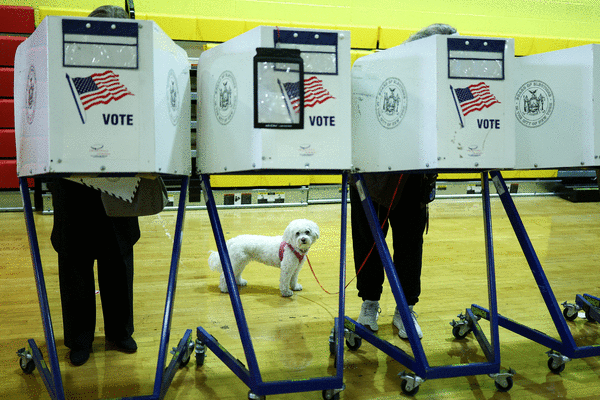
WASHINGTON — A California federal judge denied the Justice Department’s effort to have California set aside about 20,000 ballots of alleged noncitizen voters Wednesday, finding that the Trump administration sought to take over the state’s election process.
The ruling from Judge David O. Carter of the U.S. District Court for the District of California followed a hearing Tuesday in the fast-moving litigation over voting ahead of the midterm elections. Carter’s Wednesday order said the federal government effectively sought to impose a citizenship test on a portion of the population, likely in violation of federal law.
“Never before in American history has the federal government, on the eve of an election, sought to coerce a state and local government to abandon their own Constitutional elections procedures and bend to the will of the Executive Branch,” the order said.
During the hearing Carter said he would appoint a special master to handle issues related to the case.
Bill Essayli, the Justice Department attorney leading the case, told reporters after Tuesday’s hearing the administration intended to fight the case on appeal if Carter ruled against them. Essayli said the effort was at the “forefront” of the administration’s fight for “election integrity.”
“We’re committed to fighting for the American people for their right to vote and prevent it from being diluted by votes from noncitizens,” Essayli said Tuesday.
The administration has already appealed the case once, asking the U.S. Court of Appeals for the 9th Circuit over the weekend to rule that Carter had “constructively” denied their effort to quickly set aside the ballots by waiting until Tuesday to hold a hearing. A 2-1 panel of the court ruled against the administration.
The government launched the lawsuit earlier this month, alleging that the state sent out mail ballots for about 20,000 potential noncitizens and refused government efforts to set aside those ballots until the voters’ citizenship could be proven.
The state has responded, defending its procedures and arguing that the administration has overstepped its authority.
The government also filed a request for an order setting aside those ballots and prevent them from being counted until the citizenship of the voters could be verified. Carter held a hearing on that request Tuesday, and issued his order Wednesday.
Carter wrote that the request would likely violate several federal laws, including a provision in the National Voter Registration Act which requires states not to make large alterations to their voter rolls in the 90 days before an election.
Allowing the government to segregate ballots on the basis of suspicion of noncitizenship would “render the act of voter registration meaningless,” Carter wrote.
Carter also wrote that the rush was the government’s own fault, as officials obtained a list of California voters in May and could have brought the issue to state officials earlier than two weeks ago.
Carter pointed out that the administration’s claims of noncitizen voter registration have proven unreliable in the past. His order pointed to Nevada, where the administration claimed that as many as 15,903 noncitizens were registered to vote. Then the administration reduced that estimate to 6,218 and finally to 185, Carter wrote.
Nevada officials checked those 185 and found they were all citizens, Carter wrote.
In recent weeks the Trump administration has announced dozens of criminal cases against purported noncitizen voters, as officials have argued that noncitizen voting is more widespread than critics acknowledge. That includes 48 cases announced Tuesday against noncitizens who allegedly registered to vote or voted illegally.
The Trump administration has argued that officials have not done enough to curb voting by noncitizens, which is a federal crime.
The lawsuit was a major step from the Trump administration to assert a federal role in state election procedures. Separately, the administration has filed a lawsuit against the state of Alaska seeking to stop certification of the Senate election there if Republican incumbent Sen. Dan Sullivan loses due to the presence of a similarly named candidate on the ballot there.
Those courtroom moves build on more than a year of efforts to control elections, which included dozens of unsuccessful lawsuits to obtain private state voter files and executive orders to require proof of citizenship to vote and curtail mail voting.
Most of those efforts have been stopped by the courts, with the exception of some, such as the Supreme Court last month allowing the creation of a nationwide citizenship database.
©2026 CQ-Roll Call, Inc., All Rights Reserved. Visit cqrollcall.com. Distributed by Tribune Content Agency, LLC.





Comments