DOJ says California cases prove widespread noncitizen voting. Experts disagree
Published in News & Features
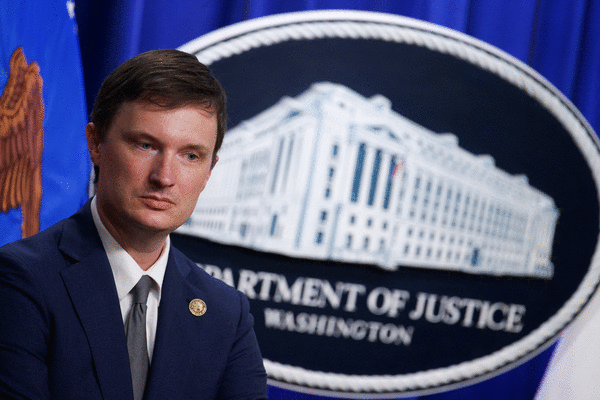
As President Donald Trump’s Department of Justice pushed for sweeping actions on a list of nearly 20,000 alleged noncitizen voters, election experts argued its much more limited prosecutions suggested Trump’s DOJ failed to find anything like the scale of fraud it claimed.
The DOJ sued California Secretary of State Shirley Weber and Los Angeles County Registrar Dean Logan last week, arguing the state had failed to agree to sequester the ballots of the 20,000 noncitizen voters identified by the federal government.
Then, on Monday, the DOJ announced charges against 28 alleged noncitizen voters, arguing at a news conference that the prosecutions showed a more pervasive problem. In court filings Monday morning, before the arrests were formally announced, the DOJ sought a temporary restraining order forcing California election officials to set aside ballots they receive from the 20,000 voters on the list.
“Today’s charges demonstrate why that lawsuit is so important,” said acting Deputy Attorney General Trent McCotter.
But election experts said the lack of more prosecutions was telling.
“If [the] DOJ could prove many more cases, we would have heard about it,” said UCLA law professor Rick Hasen in a blog post Monday. “They’ve been on an aggressive hunt nationally for such fraud. It’s not surprising they’ve found little because it is a small problem.”
David Becker, a former DOJ attorney who now leads the nonpartisan Center for Innovation and Election Research, noted the 28 prosecutions represent just 0.0001% of active voters in California.
“Given that the DOJ gave California officials a list of 20,000 alleged noncitizens on the state’s voter rolls just days ago, this raises serious questions as to whether the federal government has any evidence at all supporting its claims regarding the other 19,972 names on that list,” Becker said in an email.
Precedent for the charges
Trump’s first administration brought charges against groups of alleged noncitizen voters at least twice: once in August 2018 and again in September 2020.
In 2018, Trump’s DOJ accused 19 foreign nationals living in North Carolina of violating U.S. election law by voting in the 2016 election. But reporters from The Washington Post and WRAL found that many said they were unaware they couldn’t vote and had been handed small fines. Two ended with prison sentences of a month or less.
In 2020, the DOJ brought similar charges against another 19 individuals, none of which resulted in felony convictions or jail sentences, according to a Sacramento Bee analysis of the court cases. Sixteen of the defendants were either ordered to serve probation or pay fines, none of which exceeded three years or netted the government more than $3,000 from a single conviction. The three other cases were dismissed after the defendants underwent pretrial diversion.
Trump’s push to find noncitizen voters
On the 2024 campaign trail, Trump repeatedly made sweeping and unsupported claims of mass voter fraud, claiming without evidence that Democrats were registering noncitizens to vote; PolitiFact rated the claim a “Pants on Fire.”
Trump’s second term brought a renewed effort to focus on the issue of noncitizen voters. The DOJ’s efforts to obtain voter files from California and other states have been blocked by federal courts, as have its broader efforts to vet voters’ citizenship using a federal immigration database; earlier this month, a federal judge ruled that process runs “roughshod over longstanding laws.”
In July, U.S. Department of Homeland Security Secretary Markwayne Mullin accused California of having up to 190,000 noncitizens on its rolls. Last week, McCotter sent a letter asking Weber to sequester the ballots of the 20,000 voters, included on a password-protected thumb drive, within 48 hours or face legal action. Weber refused to comply, writing that the DOJ was “demanding unprecedented measures that threaten thousands of Californians’ right to vote, based on unverifiable information.”
The DOJ filed its lawsuit as soon as its deadline lapsed.
At the news conference, McCotter explained the discrepancy between the figures offered by Mullin and the DOJ, saying the higher figure represented “the ceiling” of possible noncitizen voters on the rolls, while 20,000 represented “the floor” — the people for whom it had the highest confidence were not citizens.
McCotter also approved a federal raid on the home of Rep. Ilhan Omar, D-Minn., last week. The DOJ is investigating Omar for fraud after they accused her late father of falsifying federal paperwork on her behalf when she emigrated from Somalia as a child and later became a U.S. citizen.
Federal and state efforts to identify noncitizen voters in other states have repeatedly failed to uncover large-scale voting or registration. In Iowa, for example, election officials said in 2024 they’d identified more than 2,100 suspected noncitizen voters. Since then, 11 people have been charged with illegally registering and voting; three of those people were acquitted and just one faces active charges for voting in the 2024 election out of 1.6 million votes cast, according to the New York Times.
Jennifer Gaudette, a political science professor at the University of California, Riverside, said cases generally showed noncitizen voters cast ballots by mistake or because they were confused about the rules.
“It certainly happens,” Gaudette said. “Just not at the scale alleged by the president and those surrounding him.”
____
©2026 The Sacramento Bee. Visit at sacbee.com. Distributed by Tribune Content Agency, LLC.



Comments